
pratham digital

Blog

Your blog category

Blog

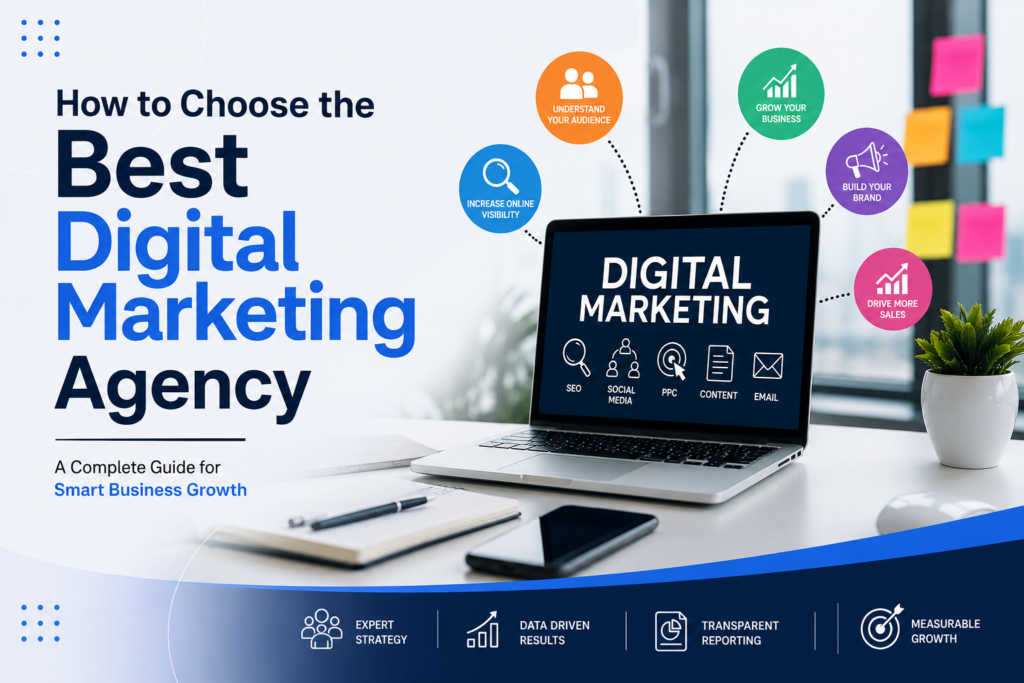
How to Choose the Best Digital Marketing Agency in 2026

How to Choose the Best Digital Marketing Agency in 2026 Focus Keyphrase: digital marketing agency Secondary Keyphrases:digital marketing services, online marketing agency, SEO agency, social media marketing agency, digital marketing company Search Intent: Commercial Suggested Slug:how-to-choose-best-digital-marketing-agency Meta Title:How to Choose the Best Digital Marketing Agency in 2026 Meta Description:Learn how to choose the best digital marketing agency in 2026. Compare services, experience, pricing, strategy, reporting, and more. Introduction Choosing the right digital marketing agency can have a major impact on the growth of your business. Today, customers use search engines, social media, websites, online reviews, videos, and other digital channels before deciding what to buy. As a result, businesses need more than just a website or social media page. They need a well-planned digital marketing strategy that connects different channels and turns online attention into measurable business results. However, choosing an agency can be difficult. There are thousands of companies offering SEO, Google Ads, social media marketing, content marketing, website development, email marketing, and other services. Some agencies focus on one specific area, while others provide complete digital marketing solutions. The challenge is not simply finding an agency. The real challenge is finding the right digital marketing agency for your business goals, budget, industry, and target audience. A good agency should understand your business, identify your ideal customers, create a practical strategy, measure performance, and continuously improve campaigns. At the same time, you should be able to understand what the agency is doing and why it is doing it. In this guide, you will learn how to evaluate a digital marketing agency, what services to look for, which questions to ask, what red flags to avoid, and how to choose an agency that can become a valuable long-term marketing partner. What Is a Digital Marketing Agency? A digital marketing agency is a company that helps businesses promote their products or services through online channels. Depending on its expertise, an agency may offer several different digital marketing services, including: For example, imagine that you own an interior design business in Bangalore. A digital marketing agency could optimize your website for searches such as “interior designer in Bangalore,” create Instagram content, run Google Ads, generate leads through Meta advertising, and track which campaigns generate customers. Therefore, the purpose of an agency should not be limited to creating posts or running advertisements. Its role should be to help your business achieve specific marketing and business objectives. Why Does Your Business Need a Digital Marketing Agency? Before hiring an agency, it is important to understand what you want to achieve. Different businesses have different goals. For example, an e-commerce company may want to increase online sales, while a local service business may primarily want more enquiries. Some common digital marketing goals include: Once you identify your goal, it becomes easier to determine which digital marketing services you actually need. Example Suppose you operate a personal loan service. Your main goal might be to generate qualified applications. In that case, your strategy could include: Google Ads → Landing Page → Lead Form → CRM → Sales Team → Customer On the other hand, a fashion brand may need a different strategy: Instagram Content → Influencer Marketing → Meta Ads → Website → Purchase → Email Retargeting Therefore, the best agency is not necessarily the one offering the largest number of services. It is the one that understands which services can support your particular business objectives. 10 Important Factors to Consider When Choosing a Digital Marketing Agency 1. Define Your Business Goals The first step is to clearly define your goals. Before speaking with an agency, ask yourself: What do I actually want digital marketing to achieve? For example, your goal could be: A clear goal gives the agency something measurable to work toward. Instead of saying: “I want more followers.” You could say: “I want Instagram to generate qualified enquiries for my business.” The second goal is much more useful because it connects social media activity to a business outcome. 2. Understand the Digital Marketing Services They Offer Not every digital marketing company provides the same services. Therefore, review the agency’s service portfolio before making a decision. SEO Search Engine Optimization helps improve your website’s visibility in organic search results. SEO services can include: Paid Advertising Paid advertising can help businesses reach potential customers through platforms such as Google and Meta. Services may include: Social Media Marketing A social media marketing agency can help businesses create and distribute content while building relationships with their audience. This can include: Content Marketing Content marketing focuses on producing useful information that attracts and educates potential customers. Examples include: Email Marketing Email marketing can help businesses nurture leads, communicate with customers, promote products, and encourage repeat purchases. The important thing is to choose services based on your business needs rather than purchasing every service an agency offers. 3. Check the Agency’s Industry Experience Experience is important, but the number of years an agency has existed should not be your only consideration. Instead, ask: Has the agency worked with businesses similar to mine? For example, an agency experienced in e-commerce may understand: A B2B agency may have more experience with: Similarly, a local business may need an agency with experience in local SEO, Google Business Profile optimization, reviews, and location-based advertising. Industry experience can reduce the learning curve. However, it should be considered alongside strategy, expertise, communication, and results. 4. Review Their Portfolio and Case Studies One of the best ways to evaluate an agency is by examining previous work. Ask whether they can provide relevant: However, don’t focus only on attractive designs. A beautiful Instagram feed does not necessarily mean that an agency can generate business results. Instead, look for evidence of measurable outcomes. For example: Activity-based result: “We created 100 social media posts.” Business-focused result: “The campaign generated qualified leads and improved the client’s conversion rate.” The second example gives you more useful information because it connects marketing activity to a business objective. 5. Understand Their Digital

Blog

How to Start a Career in Digital Marketing in 2026: Complete Guide for Beginners

Meta Title: How to Start a Career in Digital Marketing in 2026Meta Description: Learn how to start a career in digital marketing in 2026. Discover the skills, career options, tools, portfolio tips and learning path for beginners.Focus Keyword: how to start a career in digital marketingSecondary Keywords: digital marketing career, digital marketing jobs, digital marketing course, digital marketing skills, digital marketing for beginners, career in digital marketing Introduction Have you ever wondered how brands appear on Google, show up in your Instagram feed, generate leads through Facebook Ads, or convince you to buy something online? Behind many of these activities are digital marketing professionals. Digital marketing has become an attractive career option for students, freshers, job seekers, entrepreneurs and professionals looking to build new skills. The field covers multiple areas, including SEO, social media marketing, paid advertising, content marketing, email marketing, analytics and e-commerce. Google’s digital marketing career program, for example, covers areas such as search, content, email, analytics and e-commerce. The good news? You don’t necessarily need years of experience to get started. What you do need is the right knowledge, practical skills, a willingness to experiment and a portfolio that demonstrates what you can actually do. So, if you’re asking “How do I start a career in digital marketing?”, let’s break it down step by step. What Is Digital Marketing? Digital marketing is the process of promoting products, services or brands through digital channels. These channels can include: For example, when a company runs a Google Search Ad, publishes an SEO blog, creates an Instagram Reel or sends a promotional email, it is using digital marketing. The goal isn’t simply to get views or likes. Good digital marketing aims to reach the right audience, generate interest, build relationships and ultimately drive measurable business results. Why Choose Digital Marketing as a Career in 2026? One of the biggest advantages of digital marketing is the number of career paths available. You don’t have to become an expert in everything. You can start by understanding the fundamentals and then specialize in an area that interests you. Some popular specializations include: Google’s current digital marketing training also lists roles such as digital marketing coordinator, SEO specialist, search marketing specialist, paid search specialist and email marketing specialist. This variety makes digital marketing suitable for people with different interests. If you’re creative, content and social media may appeal to you. If you enjoy numbers and analysis, performance marketing and analytics may be a better fit. Step 1: Learn the Fundamentals of Digital Marketing Before jumping directly into Google Ads or SEO, understand how digital marketing works as a complete system. Start by learning: Understanding the bigger picture will help you understand why you’re using a particular marketing channel instead of simply learning which buttons to click. Step 2: Choose a Specialization Once you understand the fundamentals, choose one or two areas to explore more deeply. For example, if you enjoy writing and research, SEO and content marketing could be a good choice. If you like advertising, testing and numbers, consider performance marketing, including Google Ads and Meta Ads. If you enjoy creating content and interacting with audiences, social media marketing may be suitable. You can eventually learn multiple areas, but specializing initially can make your learning journey much more focused. Step 3: Learn the Tools Used by Digital Marketers Digital marketing is highly practical, so learning industry tools is important. Depending on your specialization, you may encounter tools such as: Google’s digital marketing curriculum includes practical exposure to tools such as Google Ads, Google Analytics, Canva, Mailchimp and Shopify. Don’t worry if these tools look complicated at first. You become comfortable by actually using them. Step 4: Get Practical Experience This is where many beginners make a mistake. They spend months watching courses but never actually create a campaign, website, social media page or SEO project. Instead, start practicing. You could: Your first project doesn’t have to be perfect. The objective is to move from “I know digital marketing” to “I can actually do digital marketing.” Step 5: Build a Digital Marketing Portfolio Your portfolio can be extremely valuable when you’re looking for your first digital marketing job. Instead of simply saying: “I know SEO and social media marketing.” Show what you’ve done. For example, your portfolio could include: SEO Project: Keyword research + optimized blog article + on-page SEO analysis. Social Media Project: 30-day content calendar + sample Instagram posts. Paid Ads Project: Sample campaign structure + audience targeting + ad copies. Analytics Project: Website traffic analysis + key observations + recommendations. Even if these are personal or practice projects, they demonstrate initiative and practical knowledge. Current career guidance also recommends building a portfolio with measurable outcomes rather than relying only on a resume. Step 6: Get Certifications Certifications aren’t a substitute for practical experience, but they can strengthen your profile, especially when you’re starting. You can explore certifications and training from recognized platforms such as Google, Meta and HubSpot. Google’s digital marketing certificate, for example, is designed for entry-level learners and doesn’t require previous digital marketing experience. The important thing is not to collect dozens of certificates. Learn → Practice → Build → Showcase. That combination is much more useful than simply collecting certificates. Step 7: Apply for Entry-Level Opportunities Once you’ve built some skills and projects, start applying. Look for roles such as: Don’t wait until you feel 100% ready. If you understand the fundamentals, have practical projects and are willing to learn, start applying. You can also explore freelancing, internships or helping a small business with its online marketing to gain practical experience. How Long Does It Take to Learn Digital Marketing? There isn’t one fixed answer. Your timeline depends on how much time you can dedicate and how deeply you want to learn. A beginner might start with: Month 1: Digital marketing fundamentals + SEO + social media Month 2: Google Ads + Meta Ads + content marketing Month 3: Analytics + practical projects + portfolio The important

Blog

AI in Digital Marketing: The Complete Beginner’s Guide to Smarter Marketing in 2026

Primary Keyword: AI in Digital MarketingSecondary Keywords: AI marketing tools, artificial intelligence in marketing, AI for digital marketing, AI content creation, AI SEO tools, AI advertising, AI marketing strategy, AI automation, digital marketing trends 2026, AI-powered marketing SEO Title AI in Digital Marketing: The Complete Beginner’s Guide for 2026 Meta Description Discover how AI in digital marketing is transforming SEO, content, social media, email marketing, and advertising. Learn the best AI tools, benefits, challenges, and strategies to grow your business in 2026. AI in Digital Marketing: The Complete Beginner’s Guide for 2026 Artificial Intelligence (AI) is no longer just a futuristic concept—it has become an essential part of modern digital marketing. Whether you’re a business owner, marketer, freelancer, or student, understanding AI in digital marketing can help you work smarter, save time, and achieve better results. From writing content and designing creatives to optimizing Google Ads and improving customer support, AI is changing how businesses connect with their audience. But here’s the important thing to remember: AI isn’t replacing marketers—it’s making marketers more productive. The businesses that learn to combine human creativity with AI technology are the ones gaining a competitive advantage. In this guide, we’ll explore what AI in digital marketing is, why it matters, its benefits, popular applications, the best AI tools, and how you can start using AI effectively. What is AI in Digital Marketing? AI in digital marketing refers to the use of artificial intelligence technologies to automate tasks, analyze customer data, personalize marketing campaigns, and improve decision-making. Instead of relying entirely on manual work, AI can process large amounts of data within seconds, helping marketers understand customer behavior and create better marketing strategies. For example, AI can: The result? Faster execution, better insights, and improved marketing performance. Why AI is Transforming Digital Marketing Digital marketing has become increasingly data-driven. Businesses collect information from websites, social media, email campaigns, and online advertisements every day. Analyzing this data manually is time-consuming and often inefficient. AI simplifies this process by: This allows marketers to focus more on strategy, creativity, and business growth. Benefits of AI in Digital Marketing 1. Saves Time AI automates repetitive tasks such as content generation, email scheduling, keyword research, and reporting. Instead of spending hours on manual work, marketers can focus on planning campaigns and growing their business. 2. Better Customer Personalization Customers expect personalized experiences. AI helps businesses recommend products, customize emails, and show relevant advertisements based on user behavior. This increases customer engagement and improves conversion rates. 3. Smarter Content Creation Creating fresh content consistently can be challenging. AI assists with: While AI speeds up content creation, adding your own expertise and brand voice is still essential for building trust. 4. Improved SEO Performance AI-powered SEO tools help marketers: This makes it easier to improve search engine rankings and attract organic traffic. 5. Better Advertising Results AI has transformed online advertising. Platforms like Google Ads and Meta Ads use machine learning to optimize: This helps businesses achieve better ROI while reducing wasted ad spend. How AI is Used in Digital Marketing AI for Content Marketing AI can help marketers brainstorm content ideas, generate article outlines, rewrite existing content, and optimize blogs for search engines. However, the best-performing content combines AI efficiency with human creativity, real-life experience, and valuable insights. AI for SEO Modern SEO relies heavily on AI tools for: AI makes SEO more data-driven and efficient. AI in Social Media Marketing Managing multiple social media platforms becomes easier with AI. It can help you: This allows businesses to maintain a consistent online presence. AI in Email Marketing AI improves email marketing by helping businesses: Personalized emails often perform better than generic campaigns. AI-Powered Chatbots Customer support is one of AI’s biggest strengths. AI chatbots can: This improves customer satisfaction while reducing support costs. Best AI Marketing Tools in 2026 Several AI tools have become popular among marketers. Some of the most widely used include: Each tool offers different features depending on your marketing goals. Challenges of Using AI in Digital Marketing While AI offers many benefits, it also has limitations. Some common challenges include: Overdependence on AI AI-generated content may lack originality if used without human editing. Always review and personalize your content before publishing. Data Privacy Businesses should use customer data responsibly and comply with applicable privacy regulations. Lack of Human Creativity AI can generate ideas quickly, but storytelling, emotional connection, and brand authenticity still come from people. The best marketing combines AI efficiency with human creativity. Future of AI in Digital Marketing AI will continue to reshape the marketing industry. In the coming years, we can expect: Rather than replacing marketers, AI will become a valuable assistant that helps professionals make faster and more informed decisions. How to Start Using AI in Your Marketing Strategy If you’re just getting started, follow these simple steps: Remember, AI is most effective when paired with strong marketing knowledge and critical thinking. Final Thoughts Artificial Intelligence has become one of the biggest game-changers in digital marketing. From SEO and content creation to advertising and customer support, AI helps businesses save time, improve efficiency, and deliver better customer experiences. However, success doesn’t come from using AI alone. It comes from understanding marketing fundamentals, creating valuable content, and using AI as a tool to enhance—not replace—your expertise. Whether you’re a student, entrepreneur, freelancer, or business owner, now is the perfect time to start learning how AI can transform your marketing efforts. Frequently Asked Questions (FAQs) Is AI replacing digital marketers? No. AI automates repetitive tasks and provides valuable insights, but human creativity, strategy, and decision-making remain essential. Can beginners use AI for digital marketing? Absolutely. Many AI tools are beginner-friendly and can help with content creation, SEO, email marketing, and social media management. Is AI useful for SEO? Yes. AI can assist with keyword research, content optimization, competitor analysis, and improving overall SEO performance. What is the best AI tool for digital marketing? The best tool depends on your needs. Popular options include ChatGPT

Blog

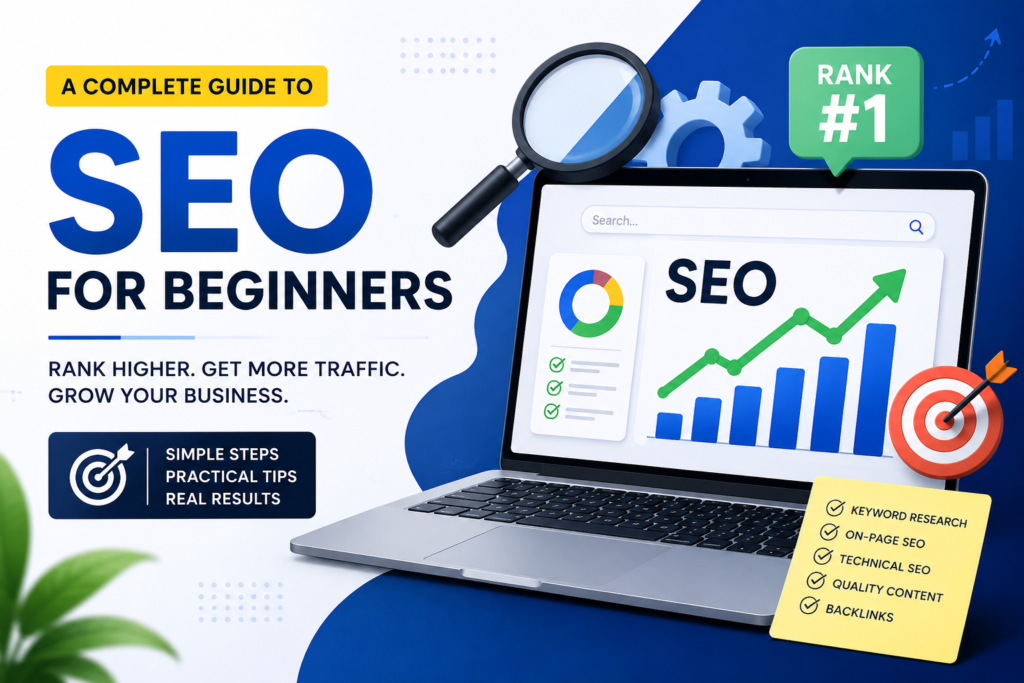
SEO for Beginners: A Complete Guide to Ranking Higher on Google in 2026

Learn the basics of Search Engine Optimization (SEO) and discover practical strategies to improve your website’s visibility, attract more visitors, and grow your business. What is SEO? If you’ve ever wondered how some websites appear at the top of Google while others remain buried on page 10, the answer is SEO (Search Engine Optimization). SEO is the process of improving your website so that search engines like Google understand your content and show it to people searching for related topics. The best part? Unlike paid ads, SEO helps you generate free, long-term traffic from search engines. Whether you’re a business owner, blogger, freelancer, or digital marketer, learning SEO is one of the most valuable skills you can develop. Why is SEO Important? Imagine opening a beautiful store in the middle of a forest where nobody visits. That’s exactly what happens when you build a website without SEO. Good SEO helps you: Studies consistently show that most users click results on the first page of Google, making higher rankings essential for online visibility. How Does SEO Work? Google’s goal is simple: Show users the most relevant and helpful content. To decide which pages deserve higher rankings, Google considers many factors, including: The better your website performs in these areas, the higher your chances of ranking. Types of SEO 1. On-Page SEO On-page SEO focuses on optimizing the content on your website. This includes: Example Instead of: www.example.com/page1 Use: www.example.com/seo-for-beginners Simple URLs are easier for both users and search engines to understand. 2. Off-Page SEO Off-page SEO refers to activities outside your website that improve your authority. Examples include: Think of backlinks as votes of confidence. When trusted websites link to your content, Google sees your site as more credible. 3. Technical SEO Technical SEO ensures your website is easy for search engines to crawl and index. It includes: Even great content can struggle to rank if technical issues prevent search engines from accessing it properly. Keyword Research: The Foundation of SEO Before writing any content, you need to know what people are searching for. Keyword research helps you discover those search terms. Example Keywords Targeting the right keywords helps attract the right audience. Understanding Search Intent One of the biggest mistakes beginners make is ignoring search intent. Ask yourself: Why is someone searching for this keyword? There are four common types of intent: Informational Users want information. Example: Navigational Users are looking for a specific website. Example: Commercial Users are comparing options. Example: Transactional Users are ready to buy. Example: Matching your content to the user’s intent increases your chances of ranking. Write High-Quality Content Google rewards content that genuinely helps readers. When creating articles: Focus on solving problems instead of simply repeating keywords. Optimize Your Content Here are a few simple optimization tips: Use Your Keyword Include your primary keyword in: Use keywords naturally—avoid stuffing them into every sentence. Improve Website Speed A slow website can hurt both rankings and user experience. Ways to improve speed: A faster website keeps visitors engaged. Make Your Website Mobile-Friendly Most users browse on smartphones. Your website should: A mobile-friendly site improves both rankings and user satisfaction. Build Quality Backlinks Backlinks remain one of the strongest ranking factors. Ways to earn backlinks: Focus on quality over quantity. Use Internal Linking Internal links connect one page of your website to another. Benefits include: For example, if you publish a guide on keyword research, link to it from this SEO article. Common SEO Mistakes to Avoid Many beginners make these mistakes: Avoiding these issues can improve your SEO performance over time. Free SEO Tools You Should Use Here are some excellent free tools: These tools help you monitor performance, discover keywords, and identify opportunities for improvement. SEO Tips for Beginners If you’re just getting started, follow these practical tips: Consistency is one of the biggest factors in long-term success. Final Thoughts SEO isn’t about tricking Google—it’s about creating helpful, relevant content that people are searching for. Start with the basics: understand your audience, research keywords, create high-quality content, optimize your website, and improve the user experience. As you continue learning and refining your strategy, your website can earn more visibility, traffic, and trust. Remember, SEO is a marathon, not a sprint. The work you put in today can continue bringing visitors to your site for months or even years. Frequently Asked Questions (FAQs) 1. What is SEO in simple words?SEO is the process of improving your website so it appears higher in search engine results, helping you attract more organic (free) traffic. 2. How long does SEO take to show results?SEO typically takes 3–6 months to show noticeable improvements, though the timeline varies depending on your competition, website authority, and content quality. 3. Is SEO free?Yes. Organic SEO doesn’t require paying for clicks, but it does require time, effort, and consistent optimization. 4. Can beginners learn SEO?Absolutely. With regular practice and by applying SEO best practices, anyone can build a strong foundation. 5. What is the most important part of SEO?Creating high-quality content that matches user intent, supported by proper keyword research and a technically sound website. SEO Meta Title SEO for Beginners: Complete Guide to Rank Higher on Google (2026) Meta Description Learn SEO step by step with this beginner-friendly guide. Discover keyword research, on-page SEO, technical SEO, backlinks, and proven tips to improve your Google rankings in 2026.Learn the basics of Search Engine Optimization (SEO) and discover practical strategies to improve your website’s visibility, attract more visitors, and grow your business. What is SEO? If you’ve ever wondered how some websites appear at the top of Google while others remain buried on page 10, the answer is SEO (Search Engine Optimization). SEO is the process of improving your website so that search engines like Google understand your content and show it to people searching for related topics. The best part? Unlike paid ads, SEO helps you generate free, long-term traffic from search engines. Whether you’re a business owner, blogger, freelancer, or digital marketer,

Scroll to Top

SPIN TO WIN!

  • Try your lucky to get discount coupon
  • 1 spin per email
  • No cheating
Try Your Lucky
Never
Remind later
No thanks